Shallot (sets) - Holland, Red (Organic)
Description
Description
Each shallot can typically yield about 5-10 shallots per harvest. Best time to plant is usually in the Fall (Sept. - Nov.)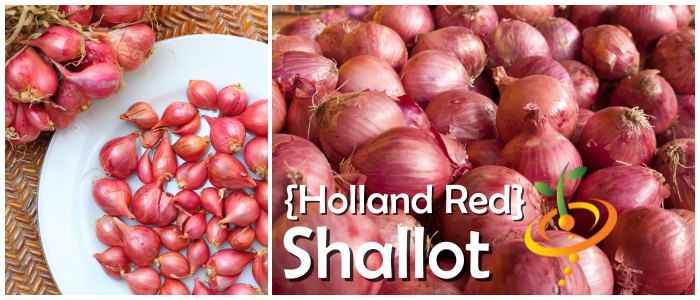
Growing Organic Red Holland Shallot Sets: A Complete Guide
Red Holland shallots are prized by gardeners and cooks alike for their rich, complex flavor and impressive yields. If you're ready to grow these elegant alliums in your garden, planting shallot sets is one of the easiest ways to get started. Unlike growing from seed, sets skip the guesswork and deliver reliable results in a single season.
Why Choose Red Holland Shallots?
Red Holland shallots stand out for their deep burgundy skin and layers of reddish-purple flesh. They're sweeter and more nuanced than regular onions, with a flavor that becomes mellow and complex when roasted or caramelized. These shallots store exceptionally well—often lasting several months in a cool, dry space—making them perfect for homesteaders and serious cooks.
When to Plant Shallot Sets
Timing is crucial for shallot success. Plant your sets in fall, roughly four to six weeks before the ground freezes in your area. This cool period allows roots to establish before winter dormancy. In milder climates, fall planting through early winter works well. Spring planting is possible but typically produces smaller bulbs since the plants have less time to develop before summer heat arrives.
Preparing Your Garden Bed
Shallots thrive in well-draining soil rich in organic matter. Choose a sunny location—at least six to eight hours of direct sunlight daily. Loosen your soil to a depth of eight inches and work in compost or aged manure. Good drainage is non-negotiable; shallots rot in waterlogged soil. If your garden tends to stay wet, consider building a raised bed filled with quality garden soil and compost.
Planting Your Sets
Space shallot sets four to six inches apart in rows, with rows spaced twelve inches apart. Plant each set pointed end up, pushing it into the soil so just the tip shows above the surface. A light mulch of straw or leaves helps insulate the sets and suppress weeds. Water gently after planting to settle the soil.
Care Through the Growing Season
Once established, shallots are relatively low-maintenance. Water consistently during dry spells—about one inch per week. As growth accelerates in spring, apply a balanced fertilizer every three to four weeks. Keep weeds under control, especially early in the season when plants are young. Avoid over-watering once bulbs begin to form; excess moisture encourages rot and fungal issues.
Knowing When to Harvest
Harvest Red Holland shallots in early to mid-summer when the tops begin to yellow and fall over. Gently lift bulbs and let them cure in a warm, airy location for two to three weeks. Once the outer skin is papery and completely dry, trim roots and store in a cool, dark place.
Growing your own organic Red Holland shallots connects you to real food and rewards you with harvests far superior to store-bought varieties. With simple care and patience, you'll enjoy these flavorful bulbs for months to come.
Quick Overview:
- Copper Red
- Easy to grow
- Rare heirloom variety - hard to find
- Stores very well
- Excellent flavor
More Details:
A coppery red outer skin peels easily to reveal a reddish-purple flesh. Excellent flavor, great in sauces. This one can produce tenfold!! Contains potassium and vitamins A, B-6 and C
How to Plant:
Plant the pointy side of the shallot facing up with no more than 1/4" of soil covering the shallot. Make sure your have 7-8 inches of soil to allow the roots to grow freely. Space each bulb 10" - 12" apart from each other.
Note: Each shallot can typically yield about 5-10 shallots per harvest. Best time to plant is usually in the Fall (Sept. - Nov.)
Frequently Asked Questions
What are Organic Red Holland Shallot Sets and why should I choose them?
When is the best time to plant Organic Red Holland Shallot Sets?
How do I prepare my garden bed for planting shallots?
What is the proper way to plant Organic Red Holland Shallot Sets?
How much sunlight and space do shallots need to grow successfully?
How do I care for my shallots during the growing season?
When and how can I harvest my Red Holland shallots?
Are Organic Red Holland Shallots suitable for storage and how long do they last?
What makes Red Holland shallots unique compared to other varieties?
Can I grow Organic Red Holland Shallot Sets in containers or raised beds?

continue shopping ...
🌱 Featured Collections
View seed catalog


We now accept the following payment methods
About Our Seeds
About Our Seeds

|
ABOUT OUR SEEDS Our seeds do not contain any exogenously inserted embryogenesis deactivator genes caused by human intervention or by any other method. We also offer a few hybrid varieties on this website and they will be labeled as such on product listing. |
|
MOISTURE-PROOF SEED PACKAGING All our seeds are packaged in high quality re-sealable moisture-proof packs designed to protect & extend the shelf-life of your seeds. We do NOT use paper envelopes. Read frequently asked questions |
|
5-STAR CUSTOMER SUPPORT |
|
SATISFACTION. GUARANTEED. |
|
HIGHEST QUALITY SEEDS |
|
TOTALLY RAW & UN-TREATED |

Know where your food comes from.
Support local growers.
Grow your own Organic/GMO-FREE food!

More Information: [What is GMO?] [Step-by-Step Grow Guides] [Safe Seed Pledge] [FAQs]
WE DO NOT GROW OR SELL SEEDS FROM MONSANTO OR ANY OTHER COMPANY THAT IS AFFILIATED WITH GMO.
✓ NON-GMO
✓ HEIRLOOM
✓ OPEN-POLLINATED (OP)
✓ RAW, NATURAL & UN-TREATED
Safe Seed Pledge
Safe Seed Pledge
OUR PLEDGE TO YOU
Agriculture and seeds provide the basis upon which our lives depend. We must protect this foundation as a safe and genetically stable source for future generations.
For the benefit of all farmers, gardeners and consumers who want an alternative. We pledge to you that we do not knowingly buy or sell genetically engineered seeds or plants. The mechanical transfer of genetic material outside of natural reproductive methods and between genera, families or kingdoms, poses great biological risks as well as economic, political, and cultural threats.
We wish to support agricultural progress that leads to healthier soils, genetically diverse agricultural ecosystems and ultimately healthy people and communities.
We do not buy - OR - grow any seed from large corporations that make Genetically Engineered seeds. We don't touch that stuff and we never will.
The seeds we offer aren't like varieties you'd typically find at a garden center.
Every variety we offer is 100% OP (open-pollinated). Open-pollination means that you can safely save the seed after harvest and preserve a collection of heirloom seed for many generations to come.
To make it perfectly clear ... Our seeds do not contain any exogenously inserted embryogenesis deactivator genes caused by human intervention.
⭐⭐⭐⭐⭐
Highest Quality Seed, Guaranteed
... continue shopping!